What Makes Cybersecurity Interviews Different
Cybersecurity interviews are unusual because they span an enormous knowledge breadth - networking fundamentals, OS internals, cryptography, application security, cloud, and sometimes hands-on technical challenges in the interview itself. Unlike software engineering where LeetCode is the main axis, security interviews test conceptual depth, practical instinct, and communication of complex ideas to non-technical stakeholders.
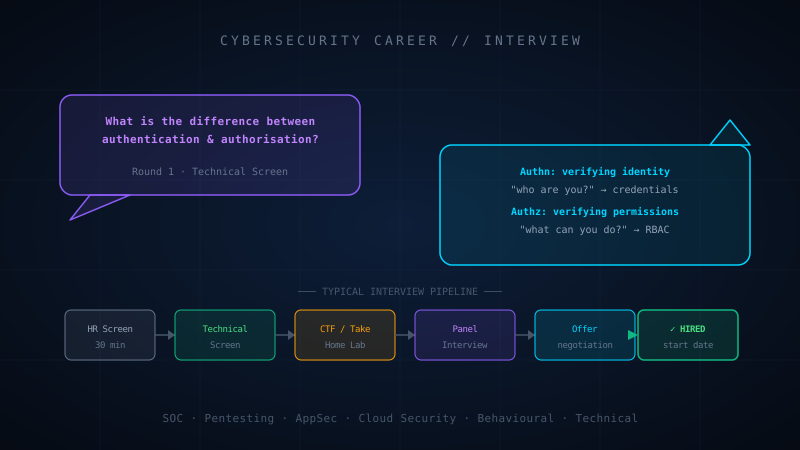
Stage 1 - HR Screen (30 min)
The HR screen rarely tests technical depth. Focus on: your career story, why security (genuine answer), and what you know about the company. Research recent breach news involving the company's industry - mentioning it shows initiative.
Stage 2 - Technical Screen (60 min)
This is where the real filtering happens. Expect questions across three areas:
Networking fundamentals
- What happens when you type google.com in a browser? - know every step: DNS, TCP, TLS, HTTP
- Explain the TLS handshake
- What is ARP and how is ARP spoofing performed?
Security concepts
- Explain the CIA triad with real examples
- What is the difference between authentication and authorisation?
- How does SQL injection work and how do you prevent it?
- Explain symmetric vs asymmetric encryption - when do you use each?
Role-specific depth
For pentesting roles: methodology (PTES, OWASP), tooling (Burp Suite, Metasploit, Nmap), and often a live challenge. For SOC roles: SIEM queries, log analysis, incident triage. For AppSec: OWASP Top 10, secure code review, threat modelling.
Stage 3 - CTF or Take-Home Lab
Many security employers give a 48-hour take-home challenge or a live Hack The Box-style box. Preparation: work through OWASP WebGoat, TryHackMe paths, and HTB easy/medium machines before interviews. Document your methodology as you go - interviewers often care more about how you approach a problem than whether you got root.
In live challenges, narrate your thinking. Silence is worse than being wrong.
Stage 4 - Panel Interview
Expect a mix of technical and behavioural questions. The classic STAR format works for behavioural. Have stories ready for: a time you found a vulnerability, a time you explained a security risk to a non-technical stakeholder, and a situation where you had to trade off security vs usability.
Questions to Ask Them
- What does the team's security maturity look like today, and what's the roadmap?
- How do security incidents get handled - is there a formal runbook?
- What does the first 90 days look like for someone in this role?
The One Thing That Separates Candidates
The candidates who stand out aren't the ones with the most certifications. They're the ones who can articulate why something is vulnerable, not just that it is. Anyone can run Nmap. Explaining what a port scan reveals about an attack surface, and what a defender should do about it - that's what gets offers.